

How Far Is Denver to Aspen? Distance & Drive Time
The drive from Denver to Aspen is about 200 miles and takes roughly three and a half hours in clear conditions. From Denver International Airport (DEN), the trip is approximately 221 miles and typically takes about 3 hours 45 minutes. During a winter storm or a busy ski weekend, however, travel time can easily stretch beyond five hours.
Blue Sky Limo has been driving guests between Denver and Aspen since 2012. The route itself is straightforward, but Aspen has one important difference from most Colorado ski towns: Independence Pass closes for much of the year. That means the route you take to Aspen in July may be very different from the one you take in January.
Denver to Aspen distance and drive times:
| Starting point | Road distance | Normal drive time | Route |
|---|---|---|---|
| Downtown Denver | About 200 miles (322 km) | About 3.5 hours | I-70 West to Exit 116, then CO-82 |
| Denver International Airport (DEN) | 221 miles (356 km) | About 3 hours 45 minutes | I-70 West to Exit 116, then CO-82 |
| Downtown Denver via Independence Pass | About 160 miles (257 km) | About 4 hours, summer only | I-70 and CO-91 to Leadville, US-24, then CO-82 |
* Drive times assume clear roads and normal traffic. Allow extra time during winter weather, holidays, and peak ski weekends.
These are the travel times we use when planning Aspen pickups. During winter, we build in additional time for mountain weather, ski traffic, and changing road conditions.
Easy Online Booking Portal
Reserve Your Private Denver to Aspen Car Service & Get Our Best Rates Today!
Online ReservationsHow long is the drive from Denver to Aspen?
The drive from Denver to Aspen takes about three and a half hours in clear conditions. From Denver International Airport, plan on approximately 3 hours 45 minutes. Those are realistic estimates when traffic is moving normally and the roads are dry. During a winter storm or a peak ski weekend, five hours or more is entirely possible.
Three factors have the biggest effect on travel time:
- Ski traffic. For the first part of the trip, you’re sharing I-70 with travelers headed toward Summit County, Vail, Beaver Creek, and the other mountain resorts. Westbound traffic typically builds Friday afternoon and evening and again early Saturday morning. On Sunday, the pattern reverses as traffic heads back toward Denver. Aspen itself may be another hour beyond Vail, but you still have to travel through the same congested corridor.
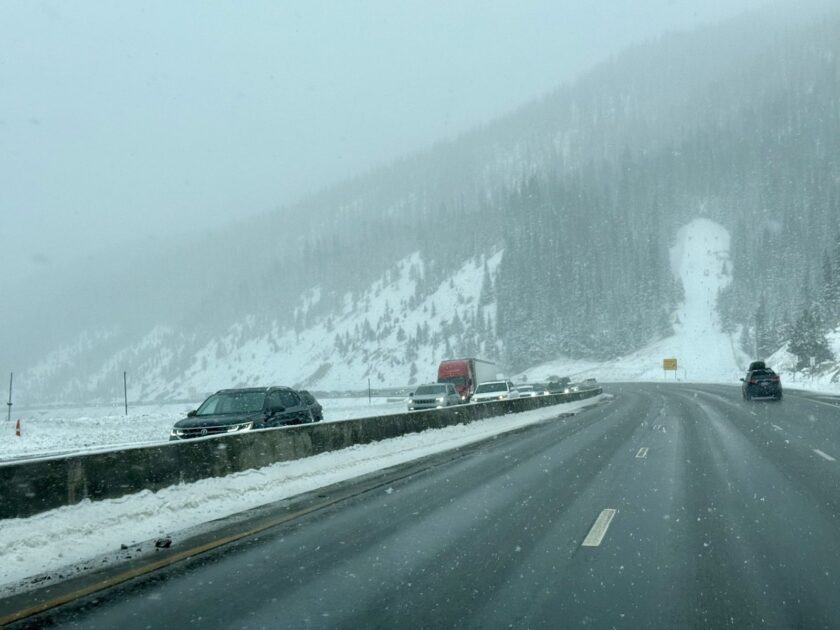
- Mountain weather. Conditions can change dramatically between Denver and the high country. It may be sunny at DEN while snow is falling heavily near the Continental Divide or Vail Pass. When that happens, traffic slows across the entire corridor.
- Glenwood Canyon. The final stretch of I-70 before Glenwood Springs travels for about 12 miles through a narrow canyon on elevated, curving sections of interstate. Speeds are lower, and a crash, rockfall, or closure can cause significant delays because there is no nearby parallel route.
Aspen is much farther west than Vail. After reaching Exit 116 at Glenwood Springs, you still have approximately 42 miles and about an hour of driving on CO-82 before arriving in Aspen. When planning the trip, don’t treat Glenwood Springs as the finish line.
What route do you take from Denver to Aspen?
The standard year-round route is I-70 West to Exit 116 at Glenwood Springs, followed by CO-82 southeast for approximately 42 miles into Aspen.
The first part of the drive follows the same mountain corridor used to reach Summit County and the Vail Valley. I-70 climbs from Denver into the foothills, passes Idaho Springs and Georgetown, and crosses beneath the Continental Divide through the Eisenhower-Johnson Memorial Tunnel at 11,158 feet. From there, the interstate descends into Summit County before climbing again over Vail Pass at 10,662 feet.
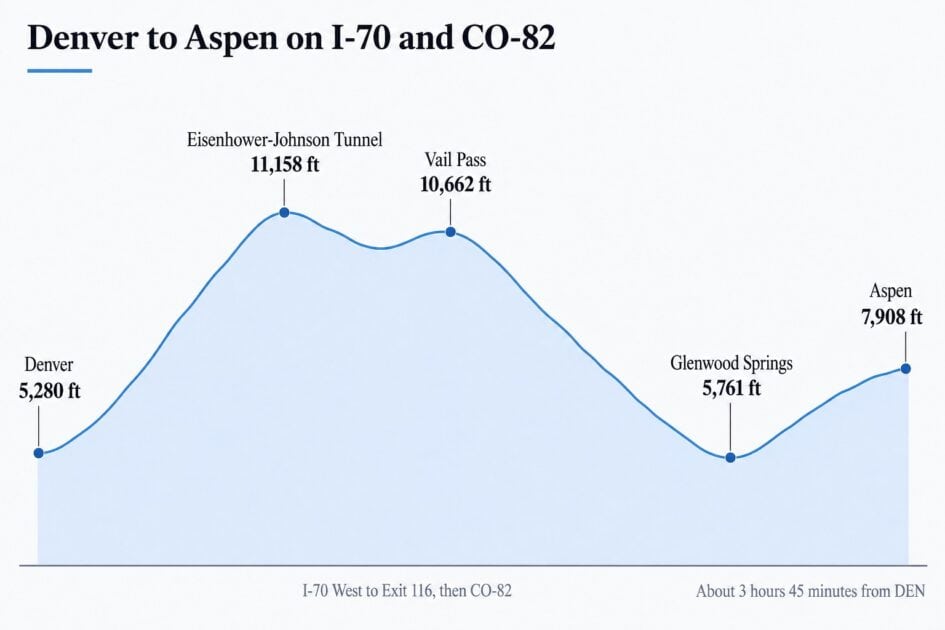
After Vail, the road follows the Eagle River west through the valley and eventually enters Glenwood Canyon before reaching Glenwood Springs.
This is where the Aspen drive changes character. Glenwood Springs sits at roughly 5,761 feet, not much higher than Denver, yet Aspen is still about an hour away. From Glenwood Springs, CO-82 turns southeast and follows the Roaring Fork Valley through Carbondale and Basalt before climbing gradually to Aspen at approximately 7,908 feet.
The final stretch is generally easier than visitors expect. CO-82 is a major state highway rather than a high mountain pass, and in normal conditions the drive through the Roaring Fork Valley is comfortable, scenic, and relatively straightforward.
Why do you see 160 miles in some places?
Because there are two different routes to Aspen, and distance also depends on where in Denver you start.
The roughly 160-mile figure usually refers to the summer route over Independence Pass. The standard year-round route through Glenwood Springs is closer to 200 miles from downtown Denver.
From Denver International Airport, the distance increases to approximately 221 miles because DEN sits well east of downtown Denver. You have to cross much of the metro area before beginning the mountain portion of the drive.
Can you take Independence Pass to Aspen?
Yes, but only when the pass is open, typically from late spring through early fall.
Independence Pass carries CO-82 across the Continental Divide at an elevation of 12,095 feet. When open, it provides a significantly shorter route to Aspen. Instead of continuing west on I-70 toward Glenwood Springs, you travel through Summit County toward Leadville and Twin Lakes before crossing Independence Pass directly into the upper Roaring Fork Valley.
The route can reduce the distance from Denver to roughly 160 miles, but shorter does not always mean faster.
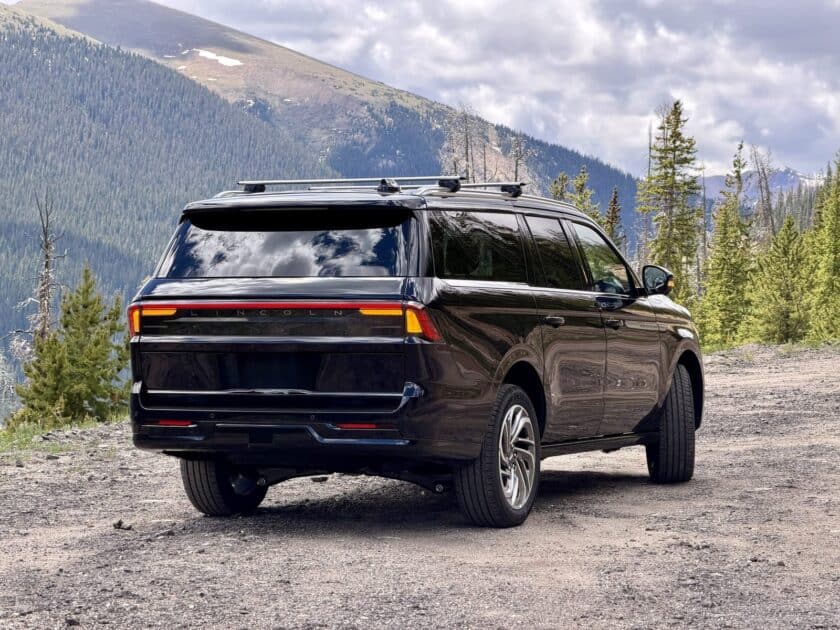
Independence Pass is a narrow two-lane mountain road with steep grades, tight curves, drop-offs, and several sections where the roadway narrows considerably. The approximately 32-mile crossing can take anywhere from 45 minutes to well over an hour depending on traffic and conditions.
For many travelers, the appeal is not saving time. It is the scenery. Independence Pass is one of the most dramatic drives in Colorado, and when the road is open and the weather is good, it can be a memorable way to enter Aspen.
Independence Pass is seasonal and vehicles over 35 feet are prohibited, including combined vehicle-and-trailer lengths greater than 35 feet. Before choosing this route, check the current gate status on CDOT’s Independence Pass travel page. Live road conditions throughout Colorado are available on COtrip.
What if Glenwood Canyon closes?
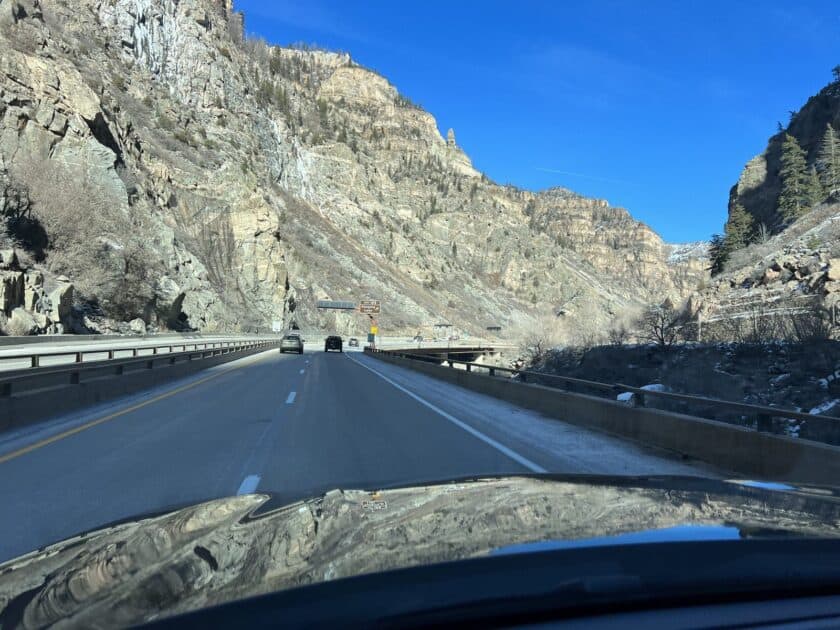
A closure in Glenwood Canyon can add hours to the drive to Aspen.
The canyon is one of the most vulnerable sections of the year-round route because I-70 runs through a narrow corridor between steep canyon walls with no convenient parallel highway. Closures can occur because of crashes, rockfall, mudslides, severe weather, or emergency road work.
Your alternatives depend heavily on the season.
When Independence Pass is open, it can provide a practical route into Aspen without traveling through Glenwood Canyon. During winter, when the pass is closed, the available detours are considerably longer.
One alternative runs north through Winter Park and Kremmling before continuing toward the Western Slope. That route can extend the trip to roughly 270 miles and more than five hours even before accounting for weather or traffic.
Our guide to alternative routes to Aspen explains the main options and when each one makes sense.
Why can the drive take five hours or more?
Winter weather and ski traffic are the main reasons a four-hour trip can become a five-hour drive or longer.
The route crosses some of Colorado’s highest interstate terrain before continuing deep into the mountains. A storm near the Continental Divide can slow traffic for miles, while conditions farther west may be completely different.
The final hour also deserves attention. CO-82 through the Roaring Fork Valley is a major highway, but it is not I-70. During a heavy storm, snow can accumulate quickly, traffic moves more slowly, and the last stretch from Glenwood Springs to Aspen may take considerably longer than usual.
| Conditions | What to plan for from DEN |
|---|---|
| Clear roads, off-peak | About 3 hours 45 minutes |
| Peak ski weekend, dry roads | Add an hour to ninety minutes |
| Active winter storm | Five hours or more, and closures are possible |
Colorado’s winter traction requirements apply to the I-70 mountain corridor, including rental vehicles. If you’re renting at DEN during winter, make sure the vehicle and tires are appropriate for the conditions before leaving the airport.
Plenty of visitors make the drive themselves throughout the winter. But if you’re unfamiliar with snow-covered mountain roads, it can be a demanding drive at the end of a long travel day, especially when much of the trip happens after dark.
Blue Sky Limo’s professional chauffeurs drive this corridor throughout the year. Our SUVs are equipped with all-wheel drive and studded snow tires for winter conditions, and our dispatch team monitors weather and adjusts pickup planning when conditions are expected to slow the route.
What’s the most reliable way to get from Denver to Aspen?
A private car service is one of the most reliable and convenient ways to travel the 221 miles from Denver International Airport to Aspen.
It is not the only option. Travelers can rent a car, take a shared shuttle, use bus connections through Glenwood Springs, or fly from DEN directly to Aspen/Pitkin County Airport (ASE). Our guide to transportation options from Denver to Aspen compares the major choices.
Each option comes with a different tradeoff.
Shared transportation can cost less per passenger, but it operates on scheduled departures and may include additional stops. Renting a car provides flexibility, but you are responsible for the drive, winter conditions, parking, and the return trip.
Flying appears fastest based on flight time alone, but airport check-in, security, baggage, transfers, and the possibility of weather-related disruptions all add uncertainty.
Blue Sky Limo’s Denver to Aspen car service is reserved exclusively for your party. Your chauffeur meets you at the airport, tracks your flight, and takes you directly to your Aspen destination at a flat rate per vehicle rather than a per-passenger fare.
Blue Sky Limo provides luxury private transportation from Denver directly to Aspen in a fleet of late-model luxury SUVs. It is a long drive, but it doesn’t need to feel like one. Your chauffeur handles the luggage, traffic, mountain roads, and changing conditions while you settle in and enjoy the trip across Colorado.
Every SUV includes:
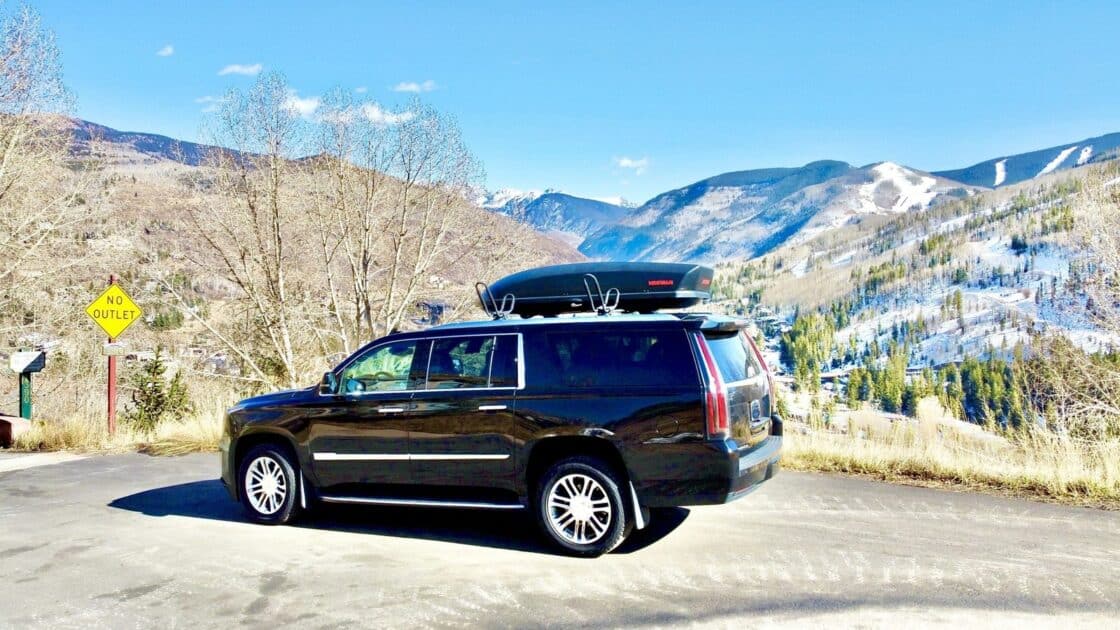
- All-wheel drive, with studded snow tires in winter
- Professional local chauffeurs who drive this corridor year-round
- Flight tracking, with pickup times adjusted if your arrival changes
- A rooftop cargo box for skis and luggage
- Onboard WiFi and free bottled water
Our Sprinter uses specialized winter tires, with studded tires when conditions require, and includes rooftop cargo capacity for skis and luggage. Blue Sky Limo is family owned and has served Colorado’s mountain communities since 2012. All transfers are private and priced per vehicle, with your rate quoted in advance.
| Rate | Large SUV (up to 4 passengers) | XL SUV (up to 6 passengers) | Sprinter Van (up to 14 passengers) |
|---|---|---|---|
| Standard fare | $1,300 | $1,400 | $2,100 |
Rates updated October 15, 2026
PLEASE NOTE: Published rates are starting prices and may vary with season, demand, holidays, weather, traffic, and vehicle availability. Please use our online booking system or call reservations for an exact quote for your travel date and itinerary.
A 10% fuel surcharge will be added.
Frequently Asked Questions About the Denver to Aspen Drive
How far is Aspen from Denver?
The drive from Denver to Aspen covers about 200 miles and takes roughly three and a half hours, using the standard year-round route through Glenwood Springs. From Denver International Airport (DEN), the trip covers approximately 221 miles.
How long does it take to drive from Denver to Aspen?
The drive from Denver to Aspen takes about three and a half hours in clear conditions. Winter storms, ski traffic, and road closures can increase the trip to five hours or more.
Is Aspen worth the drive from Denver?
For a multi-day visit, absolutely, and the drive itself passes through some spectacular scenery. As a day trip it is difficult to recommend, since a round trip means at least seven to eight hours in the car.
When is Independence Pass open?
Independence Pass is generally open from late May until early November, depending on snowfall and road conditions. CDOT closes the gates near Twin Lakes and Aspen for the winter, so check the current status before planning your route.
What is the most scenic route from Denver to Aspen?
When it is open, Independence Pass is the most scenic route from Denver to Aspen, crossing the Continental Divide at 12,095 feet into the upper Roaring Fork Valley. When the pass is closed, the standard I-70 route is still very scenic, particularly through Glenwood Canyon.
What airport do you fly into for Aspen?
Aspen/Pitkin County Airport (ASE) sits just a few miles from downtown Aspen, with Eagle County Regional Airport (EGE) roughly 70 miles away and Denver International Airport (DEN) approximately 221 miles out. ASE is scheduled to close from April 4 through November 19, 2027 for runway reconstruction, so trips in that window come through Denver or Eagle.
Is there a train from Denver to Aspen?
There is no direct passenger train from Denver to Aspen. Amtrak’s California Zephyr stops in Glenwood Springs, about 40 miles short, and you would finish the trip by bus or car.
Is it better to fly or drive from Denver to Aspen?
A nonstop flight from Denver to Aspen spends only about 50 minutes in the air, but the total trip also includes check-in, security, baggage, and transportation at each end. Driving takes roughly four hours from DEN and takes you directly from your arriving flight to your Aspen hotel or residence.
Plan your trip from Denver to Aspen
The drive from Denver to Aspen covers approximately 200 miles and takes around three and a half hours in clear conditions. From Denver International Airport, expect about 221 miles and roughly 3 hours 45 minutes on the road.
The season has a major influence on the trip. Independence Pass may provide a shorter and more scenic summer route, while winter travel means using the year-round route through Glenwood Springs and allowing additional time for snow, ski traffic, and changing road conditions.
Check COtrip before leaving and take a look at our Denver to Aspen travel plan for more help planning your visit.
If you’d rather enjoy the scenery than spend the afternoon behind the wheel, Blue Sky Limo provides private door-to-door transportation from Denver and DEN directly to Aspen.
Written by

Nikita Beriozkin
Director of Sales & Marketing — Blue Sky LimoNikita Beriozkin is the Director of Sales and Marketing at Blue Sky Limo, where he spearheads the company’s digital growth strategies and customer acquisition initiatives. With over a decade of experience in sales, online marketing, and SEO, Nikita brings a wealth of expertise to his role and drives Blue Sky Limo’s online visibility — from Vail Valley mountain transfers and DIA airport shuttles to private shuttle service to Red Rocks Amphitheatre.
