

How Far Is Denver to Vail? Distance & Drive Time
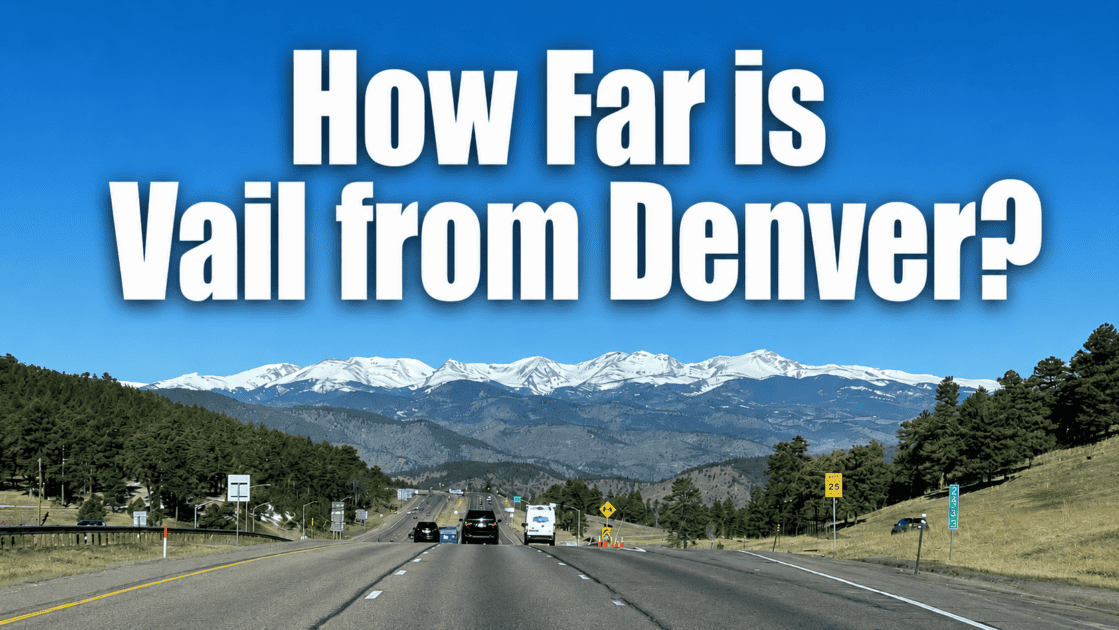
How far is Vail from Denver? Vail is approximately 100 miles west of Denver on I-70. In normal conditions, the drive takes about 2 hours. From Denver International Airport, the distance is 119.6 miles. Winter storms or ski-weekend traffic can stretch the trip to more than 3 hours.
Blue Sky Limo has been making the Denver-to-Vail drive since 2012. It’s a straightforward route, but mountain weather, traffic, and elevation can make the drive time far less predictable than the mileage suggests.
Denver to Vail distance and drive times:
| Starting point | Road distance | Normal drive time | Route |
|---|---|---|---|
| Downtown Denver | About 97 miles (156 km) | About 2 hours (1 hr 45 min in light traffic) | I-70 West |
| Denver International Airport (DEN) | 119.6 miles (192 km) | About 2 hours | I-70 West to Exit 176 |
* Drive times assume clear roads and normal traffic. Allow extra time during winter weather, holidays, and peak ski weekends.
Easy Online Booking Portal
Reserve Your Private Denver to Vail Car Service & Get Our Best Rates Today!
Online ReservationsHow long is the drive from Denver to Vail?
The drive from Denver to Vail takes about 2 hours in clear conditions. On ski weekends or in winter weather, plan on 2.5 to 3 hours or more; the same 100 miles that roll by on a quiet June morning can crawl on a snowy Saturday in February. Three things account for nearly all of the difference:
- Ski traffic. CDOT sees the same westbound backups every winter weekend: Friday from 5 to 8 p.m., starting at Floyd Hill, and again Saturday from 6 to 8 a.m. On Sundays the pattern flips, and eastbound traffic builds from late morning into the evening, backing up at the Eisenhower-Johnson Memorial Tunnel.
- Mountain weather. I-70 climbs and descends the whole way, so one storm can slow traffic all the way from Idaho Springs to Vail Pass, not just the few miles where the snow is actually falling.
- Crashes and closures. A wreck near Floyd Hill, the tunnel, or Vail Pass stops traffic until crews clear it, and on a busy day even a fender bender can back things up for miles.
If your arrival time matters, an early-morning departure is the most predictable window of the day. A 3 p.m. Friday landing at DEN in ski season usually means checking into Vail after dark.
What route do you take from Denver to Vail?
The most direct route from Denver to Vail is I-70 West the whole way. There are no turns to remember, and in normal conditions there’s no faster way to get there. It’s also one of the most scenic stretches of interstate in the country. The highway leaves Denver at 5,280 feet, climbs into the foothills past Idaho Springs and Georgetown, and crosses beneath the Continental Divide through the Eisenhower-Johnson Memorial Tunnel at 11,158 feet, the highest point on the Interstate Highway System. From the tunnel it drops into Summit County past Silverthorne and Frisco, passes Copper Mountain, and makes one last climb over Vail Pass at 10,662 feet before descending into Vail at roughly 8,150 feet. You gain more than a mile of elevation between Denver and the tunnel, and in late September the aspen stands along those climbs turn gold.
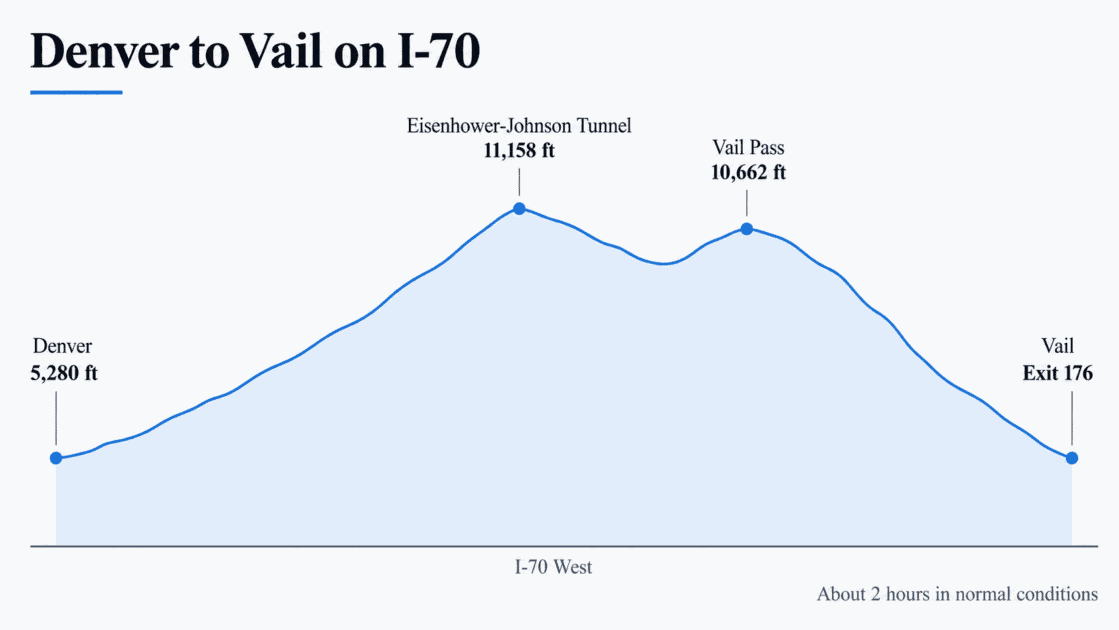
That mix of elevation, steep grades, and high-alpine weather is why a drive that looks so simple on a map can feel nothing like an ordinary two-hour highway trip.
Which exit do you take for Vail?
Exit 176 is the primary exit for Vail Village. Exit 173 serves West Vail, and Exit 180 serves East Vail. From DEN, follow I-70 West through the mountains and take the exit closest to your hotel or destination.
What happens if I-70 is closed?
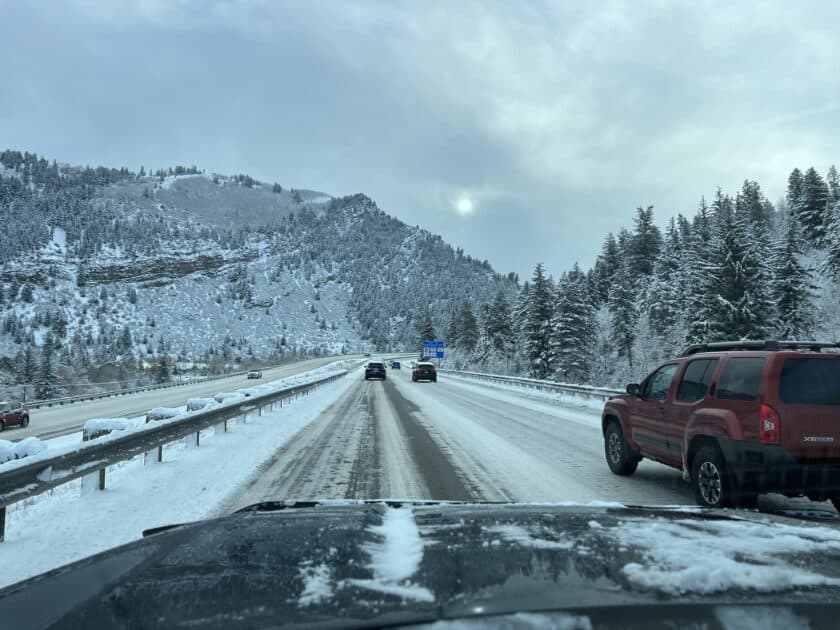
A few times each season the interstate closes altogether, usually because of a crash, a severe storm, or avalanche danger at the tunnel. When that happens, the alternative routes to Vail through Leadville or Summit County will still get you there, though they add roughly 1 to 2 hours of driving. Depending on where I-70 is closed, the detours follow US-285, CO-91, or CO-9. Blue Sky Limo’s drivers run these mountain roads year-round, and when a closure hits, they’re already rerouting instead of waiting it out.
Live conditions, closures, and cameras for the entire corridor are on COtrip, CDOT’s official traveler map. A quick check before leaving Denver can save you from a long wait at a closure.
Why can the drive to Vail take more than three hours?
Winter weather and heavy ski traffic are the two biggest reasons a two-hour drive becomes a three-hour trip. The route crosses two high points above 10,600 feet, and the weather up there can be nothing like the weather in the city. It can be sunny and dry when you leave the airport while snow is falling hard at the Continental Divide. During a storm everything slows down at once: visibility drops, plows move in, everyone leaves more stopping room, and the steep grades force lower speeds.
Colorado’s Traction Law is in effect from September 1 to May 31: while it’s active, vehicles on I-70 must have all-wheel or four-wheel drive with winter-rated tires, or chains, and that includes rental cars. Drivers who are comfortable on winter mountain roads in a properly equipped vehicle make this trip every day. For visitors who aren’t, it can be a stressful way to begin or end a vacation, and on storm days this drive is best left to the professionals. Current conditions, camera feeds, and the pass’s closure status are on our Vail Pass road conditions page.
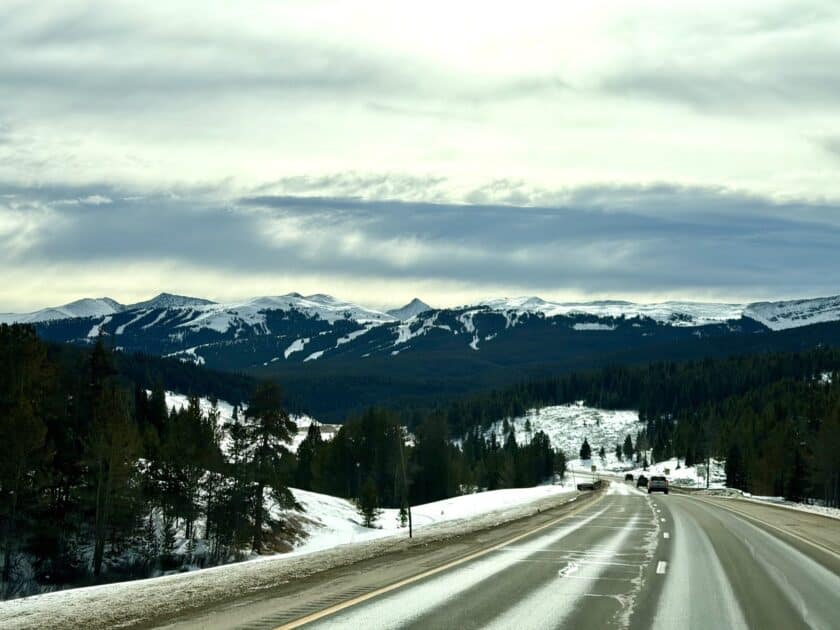
Blue Sky Limo’s private car service is the safest and most reliable way to make this drive in winter. Our professional drivers know this highway in winter, every SUV is equipped with all-wheel drive and studded snow tires, and when a storm is in the forecast, our dispatch team builds extra time into Denver pickups so a slow corridor doesn’t interfere with your arrival or pickup.
What’s the most reliable way to get from Denver to Vail?
A private car service is the most reliable and most convenient way to get from Denver to Vail. It isn’t the only way: you can rent a car, ride a shared airport shuttle, or take the public bus, and our guide to getting from Denver to Vail compares all the options in detail. The shared options cost less, but they run on fixed schedules and make stops along the way. A rental car gives you independence, but it also leaves you to deal with I-70 traffic, winter weather, parking, and the mountain driving yourself. A private transfer is the most direct option: the vehicle is reserved for your group, your chauffeur meets you at the airport, and the ride runs door to door for a flat per-vehicle rate, not a per-seat fare.
Blue Sky Limo provides luxury private transportation from Denver directly to Vail in a fleet of late-model luxury SUVs. Skip the stress of navigating I-70 and mountain roads yourself and enjoy a smooth, comfortable transfer while our professional local chauffeurs handle the drive from start to finish.
Every vehicle includes:
- All-wheel drive, with studded snow tires in winter
- Professional local chauffeurs who drive I-70 every day
- Flight tracking, with pickup times adjusted if your arrival changes
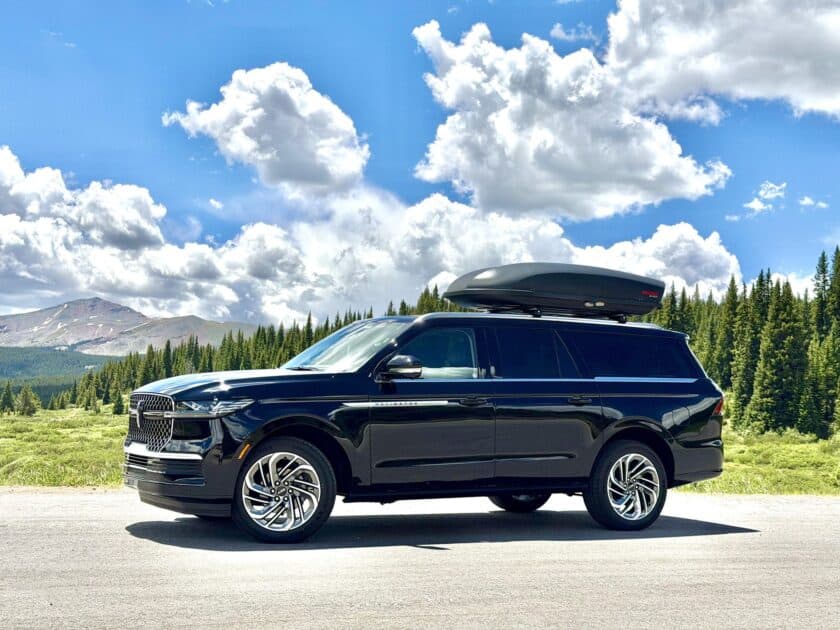
- A rooftop cargo box for skis and luggage
- Onboard WiFi and complimentary bottled water
Blue Sky Limo is family-owned and has served the Vail Valley since 2012. Transfers are private and priced per vehicle, not per passenger, with your rate quoted in advance. Rated #1 of 36 Transportation in Vail on TripAdvisor!
| Season | Large SUV (up to 4 passengers) | XL SUV (up to 6 passengers) | Sprinter Van (up to 14 passengers) |
|---|---|---|---|
| Peak (Dec 22-Jan 4 and Feb 14-22) | $745 | $800 | $1,200 |
| Winter (Nov-Apr) | $645 | $700 | $1,050 |
| Summer (May-Oct) | $595 | $650 | $995 |
Frequently Asked Questions About the Denver to Vail Drive
How far is Vail from Denver?
Vail is about 97 miles from downtown Denver via I-70 West, and 119.6 miles from Denver International Airport.
How long does it take to drive from Denver to Vail?
About 2 hours in clear weather and normal traffic. During winter storms, holidays, or busy ski weekends, the same drive can take 3 hours or longer.
What is the drive like from Denver to Vail?
It’s one of the prettiest interstate drives in Colorado: a long climb out of Denver, the tunnel under the Continental Divide, a run through Summit County, and a final push over Vail Pass into the valley. In summer it’s an easy drive with big views. In winter you’re dealing with steep grades, fast-changing weather, and heavy ski traffic, so the season matters a lot more than the distance.
Do you need 4WD or AWD to drive to Vail in winter?
In winter, yes, for all practical purposes. Colorado’s Traction Law runs from September 1 to May 31, and it applies to rental cars too. Not every rental SUV comes ready for mountain winters, so check what’s on your tires before you leave the lot. Every SUV in our fleet has all-wheel drive and studded snow tires, which goes beyond what the law requires.
How long does the drive take in a snowstorm?
Plan on at least 3 hours, and know that a serious storm has no real ceiling. Snow slows the whole corridor at once, and a bad storm can close the tunnel or Vail Pass entirely while crews clear it. If you’re driving yourself on a storm day, leave plenty of buffer. If you’re riding with us, our dispatch team has already built one in.
What time should I leave Denver to beat I-70 traffic?
Early morning is your best bet in either direction. Heading west in ski season, get past Floyd Hill before the Friday backup starts around 5 p.m., or before 6 a.m. on a Saturday. Heading home, get on the road before late morning; the Sunday eastbound backup at the tunnel builds from midday into the evening.
Is there a scenic route from Denver to Vail?
You’re already on it. I-70 is a genuinely beautiful drive: the climb to the Continental Divide, the mountain views through Summit County, and the crossing of Vail Pass. There are alternative routes, but people use them when I-70 is closed, not because they’re faster or prettier.
Plan your trip from Denver to Vail
Vail sits just under 100 miles west of downtown Denver and about 120 miles from Denver International Airport. In clear conditions the drive takes around two hours; the important variable isn’t the distance, it’s the mountains. Traffic, snow, and elevation on I-70 can add significant time, especially on winter weekends, so check COtrip before you leave and build extra room into your plans. If navigating mountain passes and unpredictable I-70 conditions isn’t how you want to start your Vail vacation, give Blue Sky Limo a call and leave the driving to us!
Written by

Nikita Beriozkin
Director of Sales & Marketing — Blue Sky LimoNikita Beriozkin is the Director of Sales and Marketing at Blue Sky Limo, where he spearheads the company’s digital growth strategies and customer acquisition initiatives. With over a decade of experience in sales, online marketing, and SEO, Nikita brings a wealth of expertise to his role and drives Blue Sky Limo’s online visibility — from Vail Valley mountain transfers and DIA airport shuttles to private shuttle service to Red Rocks Amphitheatre.
