

Driving to Snowmass, Colorado
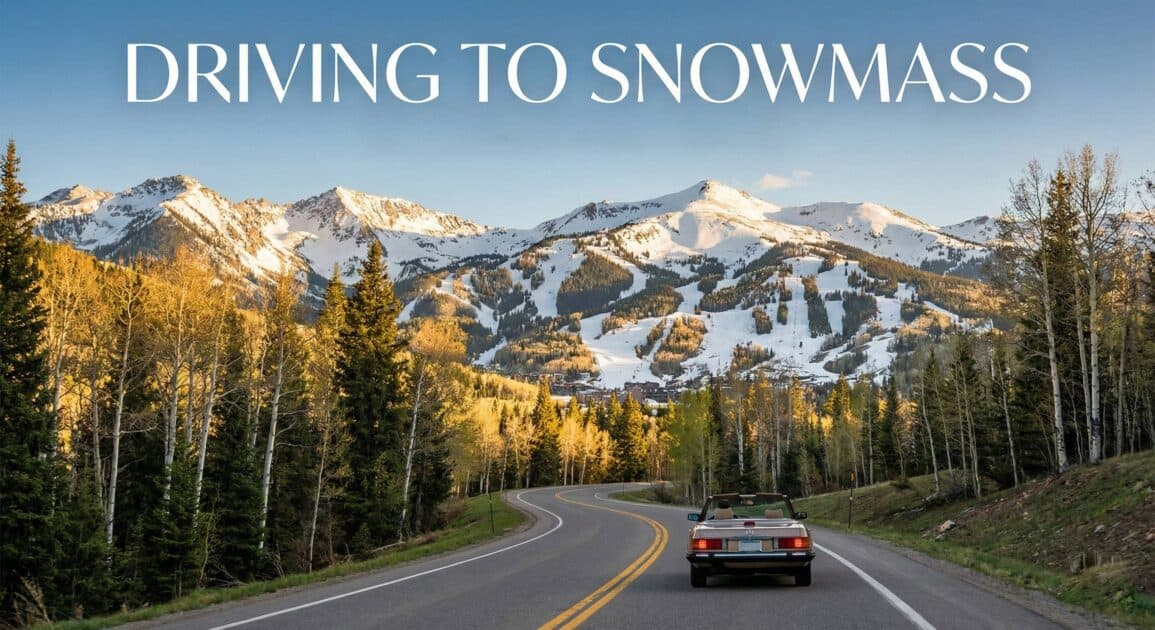
If you’re planning a trip to Snowmass Village, Colorado, driving is one of the best ways to experience the journey. The roads that lead here wind through some of the most dramatic mountain scenery in the American West, from deep river canyons and high alpine passes to wide valleys framed by 14,000-foot peaks. At Blue Sky Limo, we’ve completed thousands of transfers to and from Snowmass, and our experienced drivers know every mile of these mountain roads. In this guide, we’ll walk you through all the major driving routes, provide step-by-step directions, and share the kind of insider tips that only come from years of navigating Colorado’s high country. Whether you’re flying into Denver or Eagle County, driving down from Wyoming, or road-tripping up from Colorado Springs, this guide will help you plan a safe, scenic, and memorable drive to one of Colorado’s best mountain destinations.
Why Drive to Snowmass?
Every route to Snowmass Village takes you through Colorado’s high country, and that’s really the point. The drive itself is part of the experience. Having your own vehicle gives you the freedom to stop at overlooks, grab lunch in a riverside town, and explore on your own schedule. You can detour to the Glenwood Hot Springs on your way in, browse the shops in Basalt, or time your arrival to catch the alpenglow hitting the Elk Mountains at sunset. And for summer visitors, the option to drive over Independence Pass, one of the highest and most thrilling paved roads in the country, turns the trip into an adventure all on its own.
Getting to Snowmass by Car
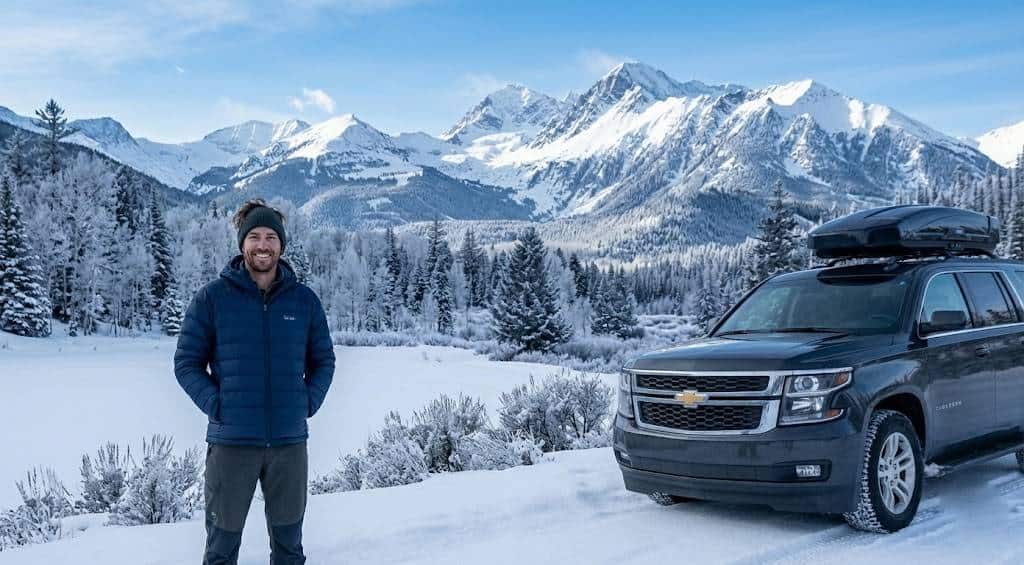
Driving to Snowmass is a true mountain journey, and the experience can vary significantly depending on when you travel. Road conditions, traffic patterns, daylight hours, and even available routes shift throughout the year. Winter storms can bring traction requirements and seasonal closures, while summer opens high alpine passes and draws heavier weekend traffic. Spring and fall each come with their own mix of beauty and unpredictability. Taking a few minutes to understand how the seasons impact your drive will help you choose the best route, prepare your vehicle properly, and arrive safely. Below is a closer look at what you can expect during each time of year:
Winter
Snow and ice are common from November through April. AWD/4WD with snow tires are strongly recommended due to frequent traction laws. Independence Pass is closed.
Spring
Highly unpredictable weather. You may experience sunny warmth followed by intense late-season snowstorms. Expect rapidly fluctuating road conditions with freeze-thaw cycles.
Summer
Excellent road conditions and long daylight hours. Independence Pass is open for scenic approaches, but expect heavy weekend traffic on the I-70 corridor.
Fall
Crisp, clear days and spectacular golden aspens peak in September and October. Offers some of the best driving conditions of the year with minimal snow.
Here are the most common driving routes to Snowmass with their respective distances and estimated drive times in good weather:
| Starting Point | Distance | Estimated Drive Time |
|---|---|---|
| Denver International Airport (DEN) | 200 miles | 3.5 – 4 hours |
| Eagle County Regional Airport (EGE) | 70 miles | 1 hour 20 minutes |
| Colorado Springs, CO | 165 miles | 4 – 4.5 hours |
| Cheyenne, WY | 265 miles | 4.5 – 5 hours |
These times assume normal traffic and clear weather. During winter storms, holiday weekends, or heavy I-70 traffic periods, build in extra time. Always check road conditions on COtrip.org before departing.
Driving From Denver International Airport (DEN)
The drive from Denver International Airport to Snowmass Village is approximately 200 miles and takes 3.5 to 4 hours under normal conditions. This is the route most visitors will take, and it happens to be one of the most scenic interstate drives in the country. You’ll climb from the Front Range foothills over the Continental Divide, pass through historic mountain towns and world-class ski resorts, drive through a canyon that took 12 years to engineer, and then cruise along the Roaring Fork River through a valley lined with ranches and mountain views before arriving in Snowmass. In winter, this is the only route available. In summer, you also have the option of taking Independence Pass for the final stretch.

| Route | Distance | Driving Time |
|---|---|---|
| DEN to Snowmass via I-70 W & CO-82 | 200 miles | 3.5 – 4 hours |
Driving Directions
- Exit the airport and follow signs for I-70 West toward Grand Junction.
- Continue on I-70 West for approximately 168 miles through the Denver metro area, up into the foothills, and over the Continental Divide.
- Take Exit 116 at Glenwood Springs for CO-82 South toward Aspen.
- Follow CO-82 South/East for approximately 32 miles through the Roaring Fork Valley.
- Turn right onto Brush Creek Road at the Snowmass Village/Snowmass Ski Area signs (there is a traffic light at this intersection).
- Follow Brush Creek Road for approximately 5 miles up into Snowmass Village.
Along the Way
The first hour takes you through the Denver metro area and into the foothills. Idaho Springs, about 45 minutes in, makes a good early stop for coffee. From there you’ll climb to the Eisenhower-Johnson Memorial Tunnel at 11,158 feet, which carries you under the Continental Divide. On the other side, you descend through Summit County past the ski towns of Keystone, Breckenridge, and Copper Mountain, climb over Vail Pass, and drop into the Eagle River Valley. The final stretch of I-70 takes you through Glenwood Canyon, a 12.5-mile engineering marvel where the highway threads between canyon walls rising up to 1,300 feet above the Colorado River. Four rest areas along this section provide access to hiking trails, a paved recreation path, and the river itself. After exiting at Glenwood Springs, CO-82 carries you southeast through the Roaring Fork Valley, past Mount Sopris and through the towns of Carbondale and Basalt, before you turn off at Brush Creek Road for the final climb to Snowmass Village.
Do NOT turn at the first sign for “Snowmass” on CO-82. This takes you to Old Snowmass, a separate rural community. Continue on CO-82 and follow signs specifically for Snowmass Village/Snowmass Ski Area.
Driving From Eagle County Regional Airport (EGE)
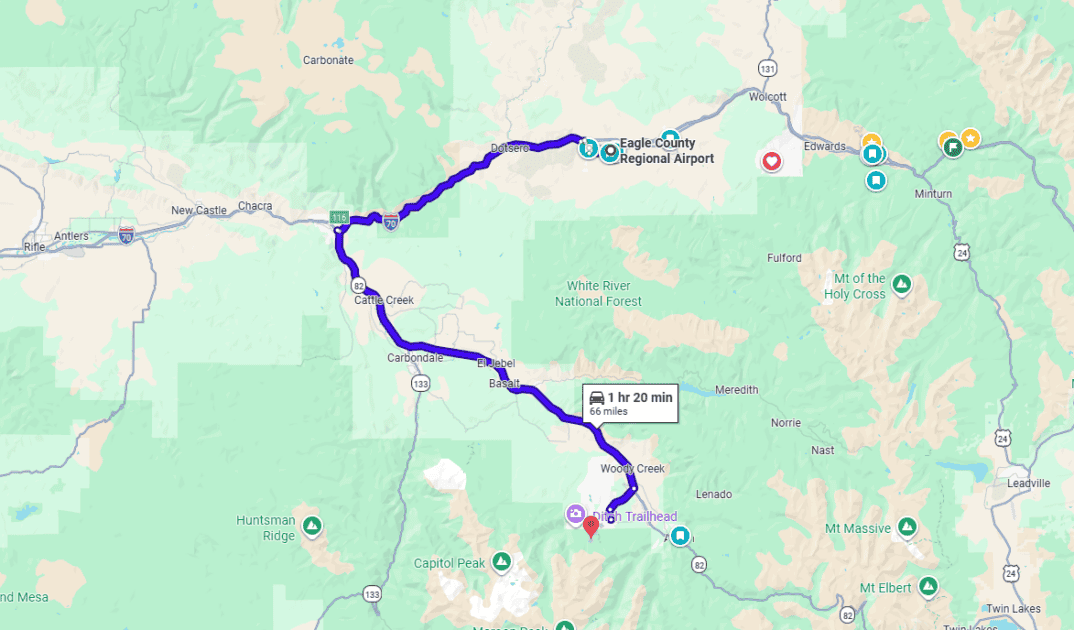
Eagle County Regional Airport is approximately 70 miles from Snowmass Village, making it a convenient alternative to Denver, especially during ski season when several airlines offer nonstop flights. The drive takes about 1 hour and 20 minutes and gives you the best section of the entire I-70 corridor: Glenwood Canyon. You’ll head west on I-70 through the Vail Valley, wind alongside the Colorado River through the canyon, and then follow CO-82 through the Roaring Fork Valley to Snowmass. It’s a relatively short drive, but the scenery is anything but ordinary.
| Route | Distance | Driving Time |
|---|---|---|
| EGE to Snowmass via I-70 W & CO-82 | 70 miles | 1 hour 20 minutes |
Driving Directions
- Exit the airport and take Cooley Mesa Road to US-6 West.
- Merge onto I-70 West toward Grand Junction.
- Continue on I-70 West for approximately 30 miles, passing through Gypsum and into Glenwood Canyon.
- Take Exit 116 at Glenwood Springs for CO-82 South toward Aspen.
- Follow CO-82 for approximately 32 miles through the Roaring Fork Valley.
- Turn right onto Brush Creek Road at the Snowmass Village signs.
- Follow Brush Creek Road for approximately 5 miles to Snowmass Village.
Along the Way
The first portion of this drive takes you west through the Eagle River Valley past the town of Gypsum before you enter Glenwood Canyon. This stretch is arguably the highlight of any drive in Colorado. The highway passes through 40 bridges and viaducts designed to minimize impact on the canyon’s fragile environment, and at points the canyon walls tower over a thousand feet above you on both sides while the Colorado River rushes below. Once you exit at Glenwood Springs, you’ll follow the same scenic CO-82 corridor through the Roaring Fork Valley as described in the Denver route above.
If you’re renting a car at EGE for winter travel, upgrade to an AWD or 4WD vehicle. The drive through Glenwood Canyon and along CO-82 can be challenging when winter storms move through, and you’ll appreciate the traction.
Driving From the South (Colorado Springs)
The route from Colorado Springs to Snowmass takes you through the geographic heart of Colorado and some of its most authentic mountain country. At approximately 165 miles, the drive takes 4 to 4.5 hours in summer when Independence Pass is open. This is a completely different experience from the I-70 corridor. Instead of interstate driving, you’ll follow two-lane highways through wide alpine basins, past historic mining towns, and alongside rivers and reservoirs backed by some of the tallest peaks in the Rocky Mountains. In winter, when Independence Pass is closed, you’ll need to route through Leadville to I-70 and then take the Glenwood Springs approach, which adds roughly an hour and brings the total distance to about 220 miles.

| Route | Distance | Driving Time |
|---|---|---|
| Colorado Springs to Snowmass via US-24 & CO-82 (summer) | 165 miles | 4 – 4.5 hours |
| Colorado Springs to Snowmass via US-24, I-70 & CO-82 (winter) | 220 miles | 5 – 5.5 hours |
Driving Directions (Summer Route via Independence Pass)
- From Colorado Springs, take US-24 West toward Manitou Springs and Woodland Park.
- Continue on US-24 West for approximately 95 miles, passing through Divide, Florissant, Hartsel, and Buena Vista.
- Continue north on US-24 through Buena Vista to Leadville.
- In Leadville, turn left (west) onto CO-82 West.
- Follow CO-82 over Independence Pass and descend into the Aspen area.
- Continue through Aspen on CO-82 heading northwest. Turn left onto Brush Creek Road at the Snowmass Village signs.
- Follow Brush Creek Road approximately 5 miles to Snowmass Village.
Driving Directions (Winter Route via I-70)
- Follow steps 1-3 above to reach Leadville.
- From Leadville, take CO-91 North for approximately 15 miles to I-70.
- Merge onto I-70 West and continue approximately 60 miles to Exit 116 at Glenwood Springs.
- Follow CO-82 South for 32 miles through the Roaring Fork Valley.
- Turn right onto Brush Creek Road and continue 5 miles to Snowmass Village.
Along the Way
Leaving Colorado Springs on US-24, you’ll climb through the Ute Pass and emerge into the vast high-altitude meadows of South Park, an expansive alpine basin ringed by mountains. The town of Fairplay is a worthwhile stop. Its South Park City Museum features over 40 restored buildings from the Colorado Gold Rush era. Further north, Buena Vista sits at the base of the Collegiate Peaks, with views of Mount Princeton, Mount Harvard, and Mount Yale. Leadville, the highest incorporated city in the United States at 10,152 feet, has a rich mining history and sits in the shadow of Colorado’s two tallest peaks: Mount Elbert (14,440 feet) and Mount Massive (14,428 feet).
Independence Pass
For summer visitors, Independence Pass offers an unforgettable alternative to the I-70/Glenwood Springs corridor. CO-82 crosses the Continental Divide at 12,095 feet, the highest paved crossing in Colorado, on a 32-mile route between Twin Lakes and Aspen. The drive climbs from the valley floor through forests and alpine meadows, past the glacial reservoirs of Twin Lakes at the foot of Mount Elbert (Colorado’s highest peak), above treeline into open tundra with panoramic views of the Sawatch Range, and then descends through dramatic switchbacks alongside the Roaring Fork River’s headwaters. Along the way you’ll pass the ruins of the Independence ghost town, a mining camp founded on July 4, 1879. To reach Snowmass, continue through Aspen on CO-82 and turn left onto Brush Creek Road.
The pass is typically open from late May (the week before Memorial Day) through late October or early November, with exact dates set by CDOT each year based on snowpack and avalanche conditions. The road is narrow, with steep drop-offs, hairpin turns, and stretches that fit only one vehicle width. There are no guardrails in many sections. Vehicles over 35 feet are strictly prohibited, and there are no services or reliable cell coverage between Leadville and Aspen. Confident mountain drivers love this road. If exposed alpine roads aren’t your thing, the Glenwood Springs route is wider, safer, and only about 30 minutes longer.
Driving From the North (Cheyenne, Wyoming)
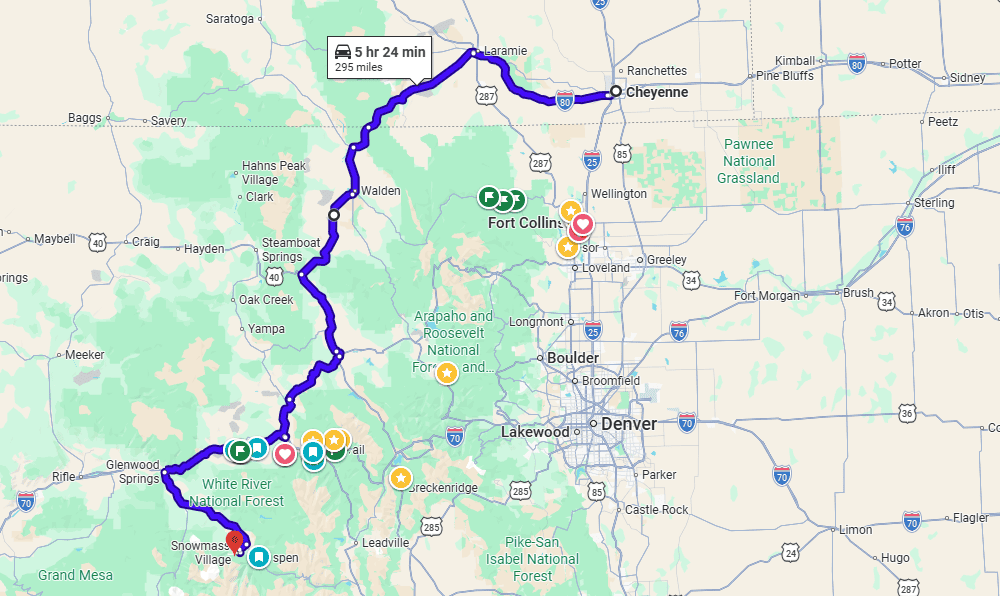
The drive from Cheyenne to Snowmass is approximately 265 miles and takes about 4.5 to 5 hours. This is a longer haul, but the transition from Wyoming’s high plains into the Colorado Rockies is dramatic and rewarding. You’ll head south on I-25 through Fort Collins and into the Denver metro area, then merge onto I-70 West for the mountain crossing to Glenwood Springs. From there, CO-82 takes you through the Roaring Fork Valley to Snowmass. The entire second half of this drive, from I-70 through Glenwood Canyon and down the Roaring Fork, is among the most scenic stretches of highway in the state.
| Route | Distance | Driving Time |
|---|---|---|
| Cheyenne to Snowmass via I-25 S, I-70 W & CO-82 | 265 miles | 4.5 – 5 hours |
Driving Directions
- From Cheyenne, take I-25 South toward Denver.
- Continue on I-25 South for approximately 100 miles to the Denver metro area.
- Merge onto I-70 West toward Grand Junction.
- Continue on I-70 West for approximately 168 miles.
- Take Exit 116 at Glenwood Springs for CO-82 South toward Aspen.
- Follow CO-82 for approximately 32 miles through the Roaring Fork Valley.
- Turn right onto Brush Creek Road at the Snowmass Village signs.
- Follow Brush Creek Road for approximately 5 miles to the Village.
Along the Way
Fort Collins makes a good first break about an hour south of Cheyenne. Once you merge onto I-70 West near Denver, you’ll follow the same spectacular mountain route described in the Denver Airport section: up through the foothills, through the Eisenhower Tunnel, past the Summit County ski towns, over Vail Pass, and through Glenwood Canyon. For a longer drive like this, planning your stops matters. Georgetown (exit 228 on I-70) is a worthwhile pause for its historic downtown and the Georgetown Loop Railroad. Glenwood Springs itself, right where you exit I-70, has the world’s largest hot springs pool if you want to break up the drive. If you’re arriving on a weekend during ski season, Saturday I-70 westbound traffic through the Denver corridor can be heavy, so an early departure from Cheyenne or a midweek arrival will save you time and frustration.
Preparing for Your Drive to Snowmass
Mountain driving in Colorado is different from highway driving at lower elevations, and a little preparation goes a long way.
- Road Conditions and Weather: Check COtrip.org before you depart. The site provides real-time traffic data, road conditions, and live camera feeds across the state. The CDOT mobile app and @ColoradoDOT on Twitter are also reliable sources. Mountain weather can change quickly, even in summer, so check conditions the morning of your drive regardless of the forecast.
- Traction and Winter Driving: When Colorado’s traction law is active (common on I-70 and mountain highways from fall through spring), your vehicle must have adequate tread depth and appropriate tires. Snow tires, mud/snow designated tires, or chains are required. AWD and 4WD with winter tires are the best setup for mountain driving in any season.
- Timing and Traffic: I-70 westbound traffic gets heavy on Friday afternoons and Saturday mornings during ski season. Sunday afternoons see congestion in the eastbound direction. Midweek travel or early morning departures save significant time in the mountain corridor.
- Wildlife: Bighorn sheep, elk, deer, and occasionally moose are common along mountain highways, particularly at dawn and dusk. Stay alert, especially on CO-82 through the Roaring Fork Valley.
- Fuel: Top off your tank before exiting I-70. Gas stations are available in Glenwood Springs and along the Roaring Fork Valley, but if you’re taking Independence Pass, there are no services between Leadville and Aspen.
Arriving in Snowmass Village
Snowmass Village is a compact, well-organized mountain community built around the ski area and its two main hubs: the Snowmass Mall and the newer Base Village. Once you arrive, you likely won’t need your car again unless you’re planning a day trip, like driving Independence Pass in summer or visiting the Maroon Bells.
Parking is available at several locations throughout the village. Town Park Station offers free parking with free shuttle service to the slopes. Base Village and Snowmass Mall have paid parking garages, though these fill up fast on busy ski days. Most hotels and lodges also offer guest parking.
Getting around Snowmass without a car is easy and by design. Free village shuttles connect all major areas, and the Sky Cab Gondola links the Snowmass Mall with Base Village. The Roaring Fork Transportation Authority (RFTA) runs bus service between Snowmass and Aspen every 20 minutes, making Aspen’s restaurants, galleries, and nightlife accessible without worrying about parking. RFTA also connects to other Roaring Fork Valley communities including Basalt, Carbondale, and Glenwood Springs. The village itself is walkable, with most lodging, dining, and ski access within a short distance of each other.
For more practical information about getting around, where to eat, things to do, and everything else you need to know once you’re here, check out our Snowmass Village Visitor Information guide.
Don’t Feel Like Driving to Snowmass?
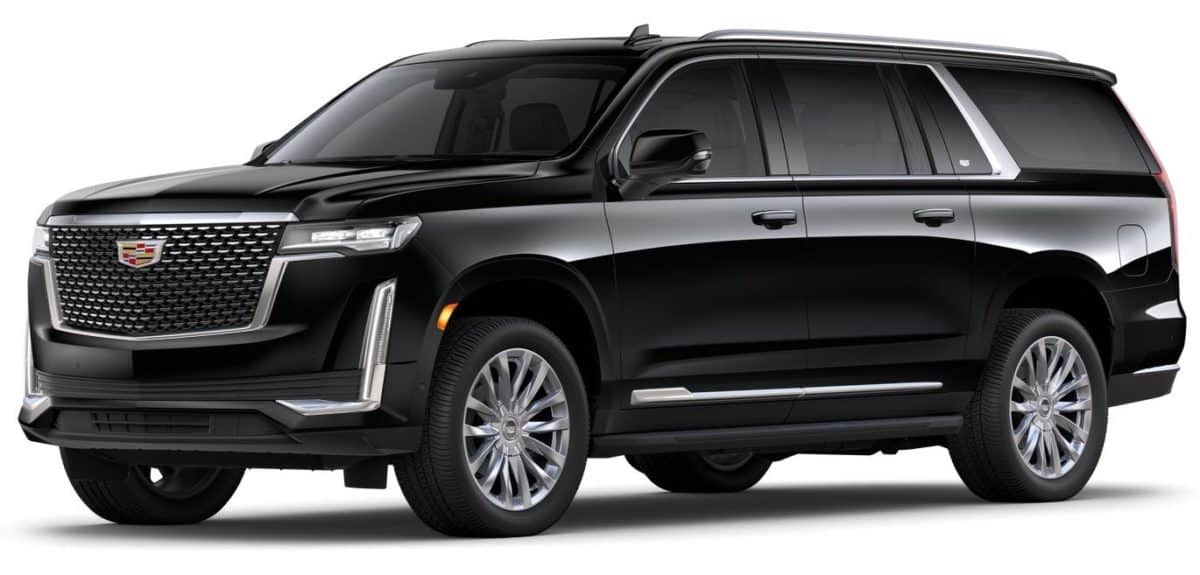
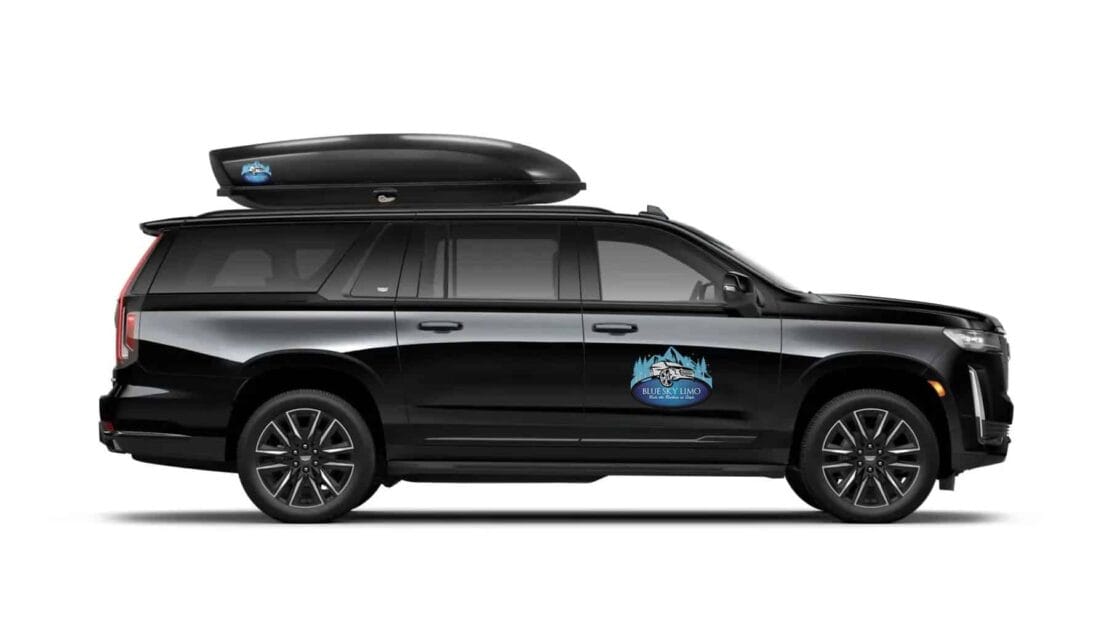
When you book with Blue Sky Limo, you ride in one of our luxury AWD SUVs equipped with WiFi and rooftop ski boxes. We offer flat-rate pricing with no surprises, flight monitoring so we’re there when you land, and direct coordination with hotel concierges throughout the Roaring Fork Valley for seamless arrivals. Whether you need a Denver Airport to Snowmass shuttle, car service from Eagle Airport, or private transportation from anywhere in Colorado, we’ll get you there safely and comfortably while you sit back and take in the mountains. Book your Snowmass transfer today and let us handle all the driving!
If navigating mountain highways, winter weather, and I-70 traffic isn’t your idea of a relaxing start to a vacation, Blue Sky Limo can handle the driving for you. We’ve been the trusted name in luxury mountain transportation since 2012, with 5-star ratings built on reliability, professionalism, and attention to detail. Our experienced professional drivers know every mile of these mountain roads and operate 24/7, 365 days a year, through every type of Colorado weather.
Written by

Nikita Beriozkin
Director of Sales & Marketing — Blue Sky LimoNikita Beriozkin is the Director of Sales and Marketing at Blue Sky Limo, where he spearheads the company’s digital growth strategies and customer acquisition initiatives. With over a decade of experience in sales, online marketing, and SEO, Nikita brings a wealth of expertise to his role and drives Blue Sky Limo’s online visibility — from Vail Valley mountain transfers and DIA airport shuttles to private shuttle service to Red Rocks Amphitheatre.
