Loveland Pass Road Conditions | Live Traffic Cams
Is Loveland Pass Open or Closed Right Now?
Loveland Pass (US-6) Status: OPEN
Loveland Pass Quick Facts:
| Summit | 11,990 ft (Continental Divide) |
| Length | ~14 miles (Exit 216 to Keystone) |
| Grade | 6.7% |
| Required Traffic | Hazmat & Overheight Vehicles |
| Winter Closures | Frequent (Avalanche Control) |
| Avg Closure | 1-4 hours |
Loveland Pass (US-6) is a vital high-elevation alternative to the Eisenhower Tunnel, and the Vail Pass crossing the Continental Divide at 11,990 feet. It is the mandatory route for hazardous material carriers and over-height vehicles prohibited from the tunnel. Known for its steep switchbacks and stunning views, the pass is subject to frequent winter closures for avalanche control and severe weather. This page provides real-time data from the Colorado Department of Transportation (CDOT) to support safe travel decisions.
Loveland Pass Map
Loveland Pass Live Traffic Cameras
East Approach (At I-70)
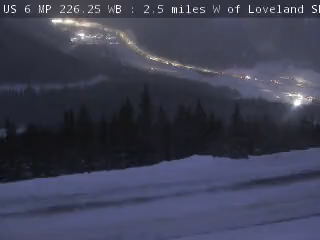
Pass Start (Access Road)

Camera images refresh automatically. Images may be delayed during high traffic periods.
Loveland Pass Travel Advisories & Alerts
Current Travel Advisories for Loveland Pass (US-6)
- No active travel advisories at this time.
Traction Law Reminder: Colorado’s Passenger Vehicle Traction Law and Commercial Vehicle Chain Law are in effect statewide September 1 through May 31. Passenger vehicles require snow tires (3/16″ tread minimum), all-season tires meeting specs, or 4WD/AWD. Commercial vehicles must carry and install chains when activated.
Current Road Surface & Weather Conditions
Real-Time Weather Data for Loveland Pass (US-6)
Weather Forecast & Travel Impact
Weather Forecast for Loveland Pass (US-6)
National Weather Service forecasts mostly cloudy for the next 5 hours (through 11:14 PM MST).
What to Expect for Loveland Pass (US-6):
Current Travel Conditions for Loveland Pass (US-6)
Traffic Conditions for Loveland Pass (US-6)
Why Does Loveland Pass Close?
CDOT closes Loveland Pass frequently due to its exposed, high-altitude terrain:
| Closure Reason | Significance | Typical Duration |
|---|---|---|
| Avalanche Control | Primary Cause. “Professor” & “Widow” slides threaten road. | 1-4 hours (planned or spontaneous) |
| Hazmat Accidents | Spills on steep grades require specialized clean-up. | 4-12+ hours |
| Whiteout Conditions | Zero visibility at 11,990 ft summit. | Variable |
| Vehicle Spin-outs | Trucks losing traction on steep 6.7% grade. | 1-3 hours |
Hazmat Protocol: When Loveland Pass is closed, CDOT may authorize escorted hazmat convoys through the Eisenhower Tunnel at the top of the hour. Hazmat vehicles must stage at designated areas.
Alternative Routes When Loveland Pass Is Closed
Primary Alternate (Non-Hazmat): Eisenhower Tunnel (I-70). Most passenger vehicles should use the tunnel. It is safer, faster, and maintained for higher traffic volumes.
Hazmat Alternate: NO DIRECT ALTERNATE when tunnel is open. You must wait for the tunnel to open to hazmat convoys (only during Loveland Pass closures) or take lengthy detours via US-40 Berthoud Pass or CO-9 Hoosier Pass.
Safely Driving Loveland Pass
Mountain Driving Tips:
- Use Low Gear: Essential for the steep 6.7% grade descent to save brakes.
- Watch for Hazmat: Large tankers use this route. Give them space on hairpin turns.
- Beware of Ice: Shaded switchbacks stay icy long after the sun comes out.
- No Stopping: Do not stop in avalanche zones or on the narrow roadway.
Vehicle Requirements
- Chains/Traction Law: Strictly enforced.
- Height: Vehicles over 13’11” MUST use this route.
- Hazmat: Mandatory route for placarded loads.
- Weight: Check current bridge weight restrictions if heavy.
Frequently Asked Questions
Why do I have to take Loveland Pass instead of the Eisenhower Tunnel?
Vehicles carrying hazardous materials (explosives, corrosives, fuel) and vehicles taller than 13 feet 11 inches are prohibited from the Eisenhower Tunnel and must use Loveland Pass.
Is Loveland Pass open in winter?
Yes, it is maintained year-round but is subject to temporary closures for avalanche mitigation and severe storms. It typically closes before I-70/Tunnel closures due to the exposed conditions.
What happens when Loveland Pass is closed?
Hazmat vehicles must wait for an escorted convoy through the Eisenhower Tunnel. Passenger vehicles should use I-70/Tunnel directly.
How steep is Loveland Pass?
It has a 6.7% average grade, which is steep and continuous. Heavy vehicles travel slowly (10-20mph). Use turnout lanes if you are moving slowly to let traffic pass.
Is there cell phone coverage over Loveland Pass?
Cell service is spotty. It is generally better at the summit and near the ski areas (Loveland Ski Area/A-Basin) but poor on the backside switchbacks.
Status Reports for Other Colorado Mountain Routes & Passes
Blue Sky Limo provides real-time road condition reports using live CDOT COtrip data, refreshed every five minutes. Select a route below for current conditions, traffic cameras, and travel advisories before your mountain drive.
Additional CDOT Road Resources:
Visit COtrip.org for real-time road conditions, live webcams, and closure alerts for all Colorado highways. Download the CDOT mobile app (iOS | Android) to view traffic cameras, track snowplow locations, and receive push alerts for closures. Follow @ColoradoDOT on X for immediate updates on chain law activations and major incidents. For recorded Colorado road condition updates, call:
- 511 (within Colorado)
- 303-639-1111 (Denver metro)
- 877-315-7623 (toll-free statewide)
Mountain weather directly impacts road conditions and closure timing across Colorado. Check the National Weather Service forecast for storm warnings and precipitation timing before traveling. During winter months, the Colorado Avalanche Information Center posts forecasts that often signal upcoming closures for avalanche control on mountain passes and corridors.
Data Source: Colorado Department of Transportation (CDOT) COtrip API | Refreshed every 5 minutes